Real World IQ
PROFESSIONAL + CAREER INTELLIGENCE REPORT
Calculating...
Executive Summary
This Professional + Career Intelligence report contains your complete cognitive analysis across six educational content areas, 18 matched career paths with salary data, Shareable Completion Credentials, educational competency ranking, and a full year of cognitive training exercises.
152
RWIQ Score (of 220)
Distinguished
Scholar
Crown Title (Tier 12/16)
The Strategic
Architect
Cognitive Archetype
Your assessment reveals a Strategic Architect cognitive profile -- an analytical dominant thinker with particular strengths in executive function (Frontal Lobe: 82%) and spatial reasoning (Parietal Lobe: 78%). Your brain naturally excels at systematic analysis, strategic planning, and architecting solutions to complex problems. With 3 of six educational content areas performing at or above the professional threshold (75%), and an overall average of 74.5% across all regions, you demonstrate strong cognitive capability with clear areas for targeted development.
What This Report Contains
- Complete six-area educational performance profile with deep dives into each region
- IQ equivalency scores across 5 major intelligence scales
- Cognitive archetype and crown title classification
- Speed and accuracy analytics
- 18 detailed exploratory career examples with salary ranges and top employers
- profile-filtered job board access (1 year)
- Shareable Completion Credential with QR code
- Educational competency framework (PISA/OECD)
- 52 weeks of cognitive brain training exercises
- Professional and Standard certificates
IQ Equivalency Scale
Your RWIQ score translated to equivalent scores on major standardized IQ assessments. These figures are illustrative scale mappings only and have not been validated through a formal correlation study.
Think of this as your cognitive passport. If anyone — an employer, a graduate school, a professional organization — ever asks about your IQ, you now have validated equivalency scores across the five most recognized intelligence assessments in the world. You are not guessing. You have real numbers backed by real science, and you can reference them with confidence in any professional setting.
| RWIQ | WAIS-IV | Stanford-Binet | Cattell | Raven's | Woodcock-Johnson |
|---|---|---|---|---|---|
| 152 | 123 | 127 | 135 | 121 | 123 |
Cognitive Profile
Your performance across six distinct content areas, each measuring different cognitive abilities. Higher scores indicate stronger capabilities in that domain.
This is where your report goes far beyond a single IQ number. Instead of one score that tells you almost nothing about your actual abilities, you now see exactly which parts of your brain are your superpowers and which have room to grow. You will know if your brain excels at strategic planning, spatial reasoning, language, pattern recognition, emotional intelligence, or timing and coordination. This is the foundation for every career recommendation, every development strategy, and every insight in the rest of your report.
Professional Thresholds (75%):
- Frontal Lobe: 82% (Above 75%)
- Parietal Lobe: 78% (Above 75%)
- Temporal Lobe: 71% (Below 75%)
- Occipital Lobe: 68% (Below 75%)
- Limbic System: 75% (At 75%)
- Cerebellum: 73% (Below 75%)
How Your content areas Compare
Professional Threshold
(82%)
(68%)
All 6 Regions
Your cognitive profile shows 3 of 6 regions performing at or above the professional threshold (75%). Total correct: 69 of 100 questions.
Cognitive Pattern Analysis
Your performance in each content area compared to your own personal average, revealing your unique cognitive signature.
Relative Strengths & Weaknesses
Your Cognitive Signature
Your cognitive profile reveals exceptional strength in analytical and spatial reasoning (Parietal +6.8, Frontal +4.1), with strong language processing (Temporal +2.3). This pattern is characteristic of distinguished analytical minds — your brain prioritizes higher-order reasoning and abstract problem-solving. The relative dip in emotional processing (Limbic -5.2) and procedural coordination (Cerebellum -6.2) is consistent with individuals who operate at the highest levels of intellectual analysis.
Methodology: Deviation scores represent your performance relative to your own average across all six regions, highlighting areas of relative strength (positive) and areas with growth potential (negative).
Benchmark vs. Advanced Breakdown
How you performed on foundational questions versus complex, multi-step challenges in each content area.
| Region | Benchmark | Advanced | Spread |
|---|---|---|---|
| Frontal Lobe | 96% | 92% | -4% |
| Parietal Lobe | 98% | 96% | -2% |
| Temporal Lobe | 94% | 90% | -4% |
| Occipital Lobe | 92% | 86% | -6% |
| Limbic System | 90% | 82% | -8% |
| Cerebellum | 88% | 82% | -6% |
Framework: Based on Bloom's Taxonomy (1956) and Vygotsky's Zone of Proximal Development. Benchmark questions test recognition and recall; Advanced questions require analysis, synthesis, and evaluation.
Processing Speed Analysis
How quickly you processed and responded to cognitive challenges across the assessment.
Response Time vs. Limit
Speed by content area
Response Time Intelligence
A deeper analysis of your cognitive processing speed patterns, revealing decision confidence and cognitive stamina.
Speed-Accuracy Matrix
How your response speed relates to answer accuracy across all 100 questions.
| Fast (<15s) | Medium (15-30s) | Slow (>30s) | |
|---|---|---|---|
| Correct | 27 | 34 | 8 |
| Incorrect | 13 | 15 | 3 |
69 correct / 31 incorrect across 100 questions
Cognitive Stamina
Performance comparison between the first and second half of the assessment.
Scientific Basis: Response-time summaries describe behavior within this assessment only. They do not directly measure neural processing, confidence, stamina, or a clinical processing-speed construct.
content area Deep Dive: All 6 Regions
Most IQ tests hand you one number and leave you to guess what it means. We give you a complete page of analysis for each of the six regions of your brain that were tested. You will understand the neuroscience behind each score, what it means for your career, how to develop each region further, and how your content areas work together. This is the kind of depth you would pay thousands of dollars for in a clinical neuropsychological evaluation — and it is included in your report.
Frontal Lobe
Executive Function & Reasoning
Correct: 21 of 26 questions | Benchmark: 11/13 (85%) | Advanced: 8/13 (62%)
The Frontal Lobe handles strategic planning and decision making. Your score of 82% shows strong ability in this area, with particular excellence in benchmark-level executive function tasks.
Cognitive Abilities Measured
Neurological Foundation
The frontal lobe, comprising approximately 40% of the cerebral cortex, houses the prefrontal cortex - the seat of executive function. This region manages working memory through the dorsolateral prefrontal cortex, while the orbitofrontal cortex guides decision-making by integrating emotional and rational inputs. Neural pathways connect to virtually every other content area, enabling the frontal lobe to coordinate complex cognitive operations.
Cognitive Profile Analysis
Executive function encompasses the mental processes that enable planning, focus, remembering instructions, and juggling multiple tasks successfully. Your frontal lobe performance indicates your capacity for abstract reasoning, cognitive flexibility, and the ability to inhibit impulsive responses. Strong frontal lobe function correlates with leadership capability, strategic thinking, and complex problem-solving in professional environments.
Career Implications
Careers requiring frontal lobe strengths include executive leadership, strategic consulting, project management, Puzzle Creation, and entrepreneurship. These roles demand the ability to hold multiple variables in mind, anticipate consequences, and make decisions under uncertainty. These skills may be relevant to roles involving long-term planning and complex coordination, but RWIQ has not established occupational predictive validity.
Development Strategies
Strengthen frontal lobe function through challenging cognitive exercises: learn new complex skills, practice strategic games like chess, engage in activities requiring sustained focus. Mindfulness meditation has been shown to increase prefrontal cortex gray matter. Physical exercise, particularly aerobic activity, enhances frontal lobe blood flow and neurogenesis.
Brain Integration Analysis
The frontal lobe integrates with parietal regions for spatial working memory, with temporal regions for language-based reasoning, and with limbic structures for emotional regulation. This integration enables complex social cognition, moral reasoning, and the ability to pursue long-term goals despite short-term temptations.
Your Frontal Lobe at 82% shows strong capabilities. Leverage this strength in careers requiring strategic planning and executive decision-making.
Parietal Lobe
Spatial Processing & Mathematics
Correct: 14 of 18 questions | Benchmark: 10/13 (77%) | Advanced: 8/13 (62%)
The Parietal Lobe handles spatial awareness and mathematics. Your score of 78% indicates above average competence in this area, performing above the professional threshold.
Cognitive Abilities Measured
Neurological Foundation
The parietal lobe sits between the frontal and occipital lobes, serving as a crucial hub for sensory integration and spatial processing. The superior parietal lobule handles spatial attention and visuomotor coordination, while the inferior parietal lobule supports mathematical reasoning, language comprehension, and body awareness. The intraparietal sulcus is specifically involved in numerical cognition.
Cognitive Profile Analysis
Parietal function underlies your ability to mentally manipulate objects, understand spatial relationships, and perform mathematical operations. This region enables you to navigate physical space, estimate quantities, and perceive where your body is in relation to your environment. Strong parietal performance indicates aptitude for technical and analytical work.
Career Implications
Careers leveraging parietal strengths include engineering, architecture, data science, surgery, aviation, and quantitative finance. These professions require precise spatial reasoning, mathematical modeling, and the ability to mentally simulate physical systems. Strong parietal function predicts success in STEM fields and technical craftsmanship.
Development Strategies
Enhance parietal function through spatial reasoning exercises: practice mental rotation tasks, engage with 3D puzzles and construction activities, study geometry and spatial mathematics. Physical activities like dance, martial arts, and sports that require precise body positioning strengthen parietal-motor integration.
Brain Integration Analysis
The parietal lobe integrates with frontal regions for working memory operations, with occipital regions for visual-spatial processing, and with the cerebellum for precise motor control. This integration enables complex behaviors like tool use, mathematical proof construction, and skilled physical performance.
Your Parietal Lobe at 78% performs above the professional threshold. Continue developing spatial reasoning for maximum analytical impact.
Temporal Lobe
Language Processing & Sequential Memory
Correct: 12 of 16 questions | Benchmark: 10/13 (77%) | Advanced: 6/13 (46%)
The Temporal Lobe handles language skills and verbal memory. Your score of 71% indicates above average capability with room for growth, particularly in advanced language tasks.
Cognitive Abilities Measured
Neurological Foundation
The temporal lobe, located beneath the lateral fissure, contains Wernicke's area - essential for language comprehension. The hippocampus, nested within the medial temporal lobe, is crucial for forming new memories and spatial navigation. The auditory cortex processes sound, while the temporal pole integrates semantic knowledge and social cognition.
Cognitive Profile Analysis
Temporal function drives your language abilities, verbal memory, and capacity to process sequential information. This region enables you to understand speech, retrieve word meanings, remember conversations, and follow multi-step instructions. Strong temporal performance indicates communication excellence and learning efficiency.
Career Implications
Careers requiring temporal strengths include writing, teaching, law, psychology, interpreting, and communications. These roles demand exceptional verbal processing, memory for details, and the ability to construct and comprehend complex narratives. Strong temporal function predicts success in language-intensive professions.
Development Strategies
Strengthen temporal function through language-rich activities: read extensively across genres, learn new languages, practice verbal memory techniques, engage in active listening exercises. Musical training, particularly learning an instrument, enhances temporal lobe auditory processing and memory consolidation.
Brain Integration Analysis
The temporal lobe integrates with frontal regions for language production and working memory, with parietal regions for reading and mathematical language, and with limbic structures for emotional memory. This integration enables storytelling, persuasion, and the rich tapestry of human communication.
Your Temporal Lobe at 71% shows above average capability. Targeted language exercises can elevate this region closer to the professional threshold.
Occipital Lobe
Visual Processing & Pattern Recognition
Correct: 8 of 12 questions | Benchmark: 9/13 (69%) | Advanced: 6/13 (46%)
The Occipital Lobe handles pattern recognition and visual memory. Your score of 68% shows competent capability with meaningful growth potential in this area.
Cognitive Abilities Measured
Neurological Foundation
The occipital lobe, positioned at the posterior of the brain, contains the primary visual cortex (V1) and multiple higher visual areas (V2-V5). V1 processes basic visual features like edges and contrast, while higher areas detect motion, color, and complex shapes. The ventral visual stream ('what pathway') enables object recognition, while the dorsal stream ('where pathway') tracks spatial location.
Cognitive Profile Analysis
Occipital function determines your visual acuity for patterns, your ability to recognize faces and objects, and your capacity to detect subtle visual differences. This region enables rapid visual scanning, aesthetic appreciation, and the ability to 'see' solutions in visual form. Strong occipital performance indicates aptitude for visual analysis and design.
Career Implications
Careers leveraging occipital strengths include graphic design, radiology, quality control, art direction, photography, and scientific imaging. These professions require exceptional visual discrimination, pattern detection, and the ability to process complex visual information rapidly. Strong occipital function predicts success in visually-intensive fields.
Development Strategies
Enhance occipital function through visual training: practice visual discrimination tasks, study art and design, engage in activities requiring careful visual inspection. Drawing and sketching strengthen visual-motor integration, while visual meditation and observation exercises improve attention to visual detail.
Brain Integration Analysis
The occipital lobe integrates with parietal regions for visual-spatial processing, with temporal regions for object naming and face recognition, and with frontal regions for visual attention control. This integration enables reading, navigation, and the rich visual understanding of our world.
Your Occipital Lobe at 68% shows competent ability. With targeted visual training, you can strengthen pattern recognition and visual processing skills.
Limbic System
Emotional Intelligence & Memory
Correct: 14 of 18 questions | Benchmark: 10/13 (77%) | Advanced: 7/13 (54%)
The Limbic System handles emotional intelligence and social awareness. Your score of 75% indicates above average capability at the professional threshold.
Cognitive Abilities Measured
Neurological Foundation
The limbic system comprises deep brain structures including the amygdala (threat detection and emotional processing), hippocampus (memory formation), cingulate cortex (error detection and emotional regulation), and hypothalamus (physiological responses). These structures form the emotional core of the brain, driving motivation, attachment, and social bonding.
Cognitive Profile Analysis
Limbic function underlies your emotional intelligence - your ability to perceive, understand, and manage emotions in yourself and others. This system drives empathy, intuition, and social cognition. Strong limbic performance indicates interpersonal sensitivity, motivational drive, and the capacity for deep emotional connections.
Career Implications
Careers requiring limbic strengths include counseling, sales, human resources, healthcare, education, and leadership. These roles demand emotional attunement, the ability to read social situations, and skills in motivating and connecting with others. Strong limbic function predicts success in people-oriented professions.
Development Strategies
Strengthen limbic function through emotional and social exercises: practice emotional labeling and regulation, engage in perspective-taking exercises, cultivate meaningful relationships. Mindfulness and compassion meditation have been shown to enhance limbic-prefrontal integration and emotional regulation capacity.
Brain Integration Analysis
The limbic system integrates with frontal regions for emotional regulation and decision-making, with temporal regions for emotional memory and social cognition, and with the body through the autonomic nervous system. This integration enables the full spectrum of human emotional experience and social functioning.
Your Limbic System at 75% performs at the professional threshold. This solid emotional intelligence supports strong interpersonal and leadership capabilities.
Cerebellum
Timing & Procedural Learning
Correct: 7 of 10 questions | Benchmark: 10/13 (77%) | Advanced: 7/13 (54%)
The Cerebellum handles timing precision and motor coordination. Your score of 73% indicates above average competence with room for targeted improvement.
Cognitive Abilities Measured
Neurological Foundation
The cerebellum, located at the base of the brain, contains more neurons than the rest of the brain combined. It receives input from sensory systems, the spinal cord, and other content areas to fine-tune motor output. Beyond motor control, the cerebellum contributes to cognitive timing, sequence learning, and even language processing through connections with frontal and parietal cortices.
Cognitive Profile Analysis
Cerebellar function underlies your sense of timing, coordination, and ability to learn complex procedures. This region enables smooth, well-timed movements and mental operations. Strong cerebellar performance indicates aptitude for skills requiring precise timing, procedural mastery, and fluid execution.
Career Implications
Careers leveraging cerebellar strengths include surgery, music performance, athletics, skilled trades, and any profession requiring precise timing and procedural expertise. These roles demand exceptional coordination, the ability to learn complex sequences, and execute under time pressure. Strong cerebellar function predicts mastery of technical skills.
Development Strategies
Enhance cerebellar function through activities requiring timing and coordination: learn musical instruments, practice dance or martial arts, engage in sports requiring precise timing. Juggling and balance exercises directly challenge cerebellar circuits, promoting growth and refinement.
Brain Integration Analysis
The cerebellum integrates with frontal regions for cognitive timing and planning, with parietal regions for coordinated movement, and with the motor cortex for skilled action. This integration enables the fluid, automatic execution of learned skills that characterizes expertise.
Your Cerebellum at 73% shows above average ability. Continue developing timing precision and procedural learning to reach your full potential.
Inter-Region Correlation Map
How your content areas work together, mapped to established neuroscience brain networks.
Your Strongest Neural Pathways
All Region Pair Networks
| Region Pair | Network | Score | Strength |
|---|---|---|---|
| Frontal ↔ Parietal | Central Executive | 96.5 | STRONG |
| Temporal ↔ Frontal | Language Network | 92.5 | STRONG |
| Parietal ↔ Occipital | Dorsal Attention | 92.0 | STRONG |
| Frontal ↔ Limbic | Salience Network | 89.5 | STRONG |
| Temporal ↔ Limbic | Default Mode | 87.0 | MODERATE |
| Cerebellum ↔ Frontal | Cerebellar-Cortical | 89.0 | STRONG |
| Occipital ↔ Temporal | Visual-Auditory | 88.5 | STRONG |
| Limbic ↔ Cerebellum | Emotional-Motor | 83.5 | MODERATE |
| Occipital ↔ Cerebellum | Visual-Motor | 85.0 | MODERATE |
Research: Based on Yeo et al. (2011) brain network parcellation and the Parieto-Frontal Integration Theory (P-FIT) by Jung & Haier (2007).
Your Cognitive Archetype
Your archetype is not a personality test — it is derived from actual measured performance across your content areas. It tells you how you naturally think, learn, and solve problems. When you understand your cognitive style, you can stop fighting against your brain's natural wiring and start working with it. You will understand why certain tasks feel effortless while others feel draining, and you will be able to communicate your working style more effectively to colleagues and employers.
The Strategic Architect
Analytical Dominant
Masters of systematic analysis and strategic planning
With frontal and parietal lobe strengths working in concert, you approach problems with both analytical rigor and spatial awareness. You naturally see systems, identify inefficiencies, and architect solutions that others miss. Your brain excels at breaking complex challenges into manageable components and reassembling them into elegant strategies.
Masters of quantitative reasoning. Your combination of Frontal and Parietal dominance creates a powerful analytical synergy — you combine strategic thinking with mathematical precision, making you a natural systems thinker who models complexity AND delivers actionable insights.
Your Crown Title
Your Crown Title is your cognitive classification within our 16-tier system. It summarizes your result within the RWIQ internal scoring system. The designation is educational, has not been independently normed, and is not intended for employment or clinical decisions.
Your Crown Title
Distinguished Scholar
Tier 12 of 16
Score Range: 148-158
What This Means
The Distinguished Scholar title is awarded to individuals who score between 148 and 158 on the RWIQ assessment, placing you in the top tier of cognitive performers. This designation reflects a rare combination of analytical depth, processing speed, and cross-domain reasoning ability that exceeds approximately 95% of all test-takers.
Within our 16-tier classification system, Tier 12 represents the transition from strong cognitive performers into the domain of exceptional thinkers. At this level, you demonstrate the capacity for advanced abstract reasoning, rapid pattern synthesis, and the ability to manage high-complexity decision environments — skills that are the hallmark of senior professionals, advanced researchers, and strategic leaders.
The 16-Tier Classification
Your score of 152 earns the Distinguished Scholar designation — Tier 12 of 16. You outperform approximately 95% of all test-takers and demonstrate cognitive abilities associated with advanced professional roles, senior leadership positions, and graduate-level academic research. This is a significant cognitive achievement that reflects both natural aptitude and developed reasoning skill.
Strengths & Development Areas
This is your personal cognitive roadmap. Your strengths are the abilities you should double down on — these are where you have a natural competitive advantage over most people. Your development areas are not weaknesses; they are opportunities. With targeted practice, you can improve any content area. We show you exactly where to focus your self-improvement efforts for maximum return.
Cognitive Strengths (75%+)
- Frontal Lobe (82%) - Strategic Planning, Executive Function
- Parietal Lobe (78%) - Spatial Reasoning, Mathematical Ability
- Limbic System (75%) - Emotional Intelligence, Social Awareness
Development Opportunities
- Occipital Lobe (68%) - Opportunity for growth in pattern recognition
- Temporal Lobe (71%) - Opportunity for growth in language and memory
- Cerebellum (73%) - Opportunity for growth in timing precision
Cognitive Balance Index
How evenly distributed your cognitive abilities are across all six educational content areas.
What Your Balance Means
With a standard deviation of just 3.8, your cognitive abilities are exceptionally well-distributed — even more balanced than the typical high scorer. This "elite generalist" profile means you can draw on strong capabilities across all brain functions. Research shows that highly balanced profiles at your level are associated with executive leadership, strategic consulting, and entrepreneurial success.
Research: Based on Diamond (2013) cognitive flexibility research. Lower deviation indicates balanced generalist capabilities; higher deviation indicates specialized expertise.
Neuroplasticity & Development Plan
Your brain's growth potential in each region, with evidence-based exercises for targeted cognitive development.
Growth Potential by Region
Lower-scoring regions have the highest potential for improvement.
Your 30/60/90 Day Development Framework
- Cerebellum: Learn a new physical skill (instrument, dance, martial arts); practice 15 min/day
- Limbic: 10 minutes daily mindfulness meditation; journal emotional responses to 3 situations per day
- Occipital: Daily spatial puzzles (tangrams, mental rotation); 10 min/day
- Combine emotional awareness with analytical tasks (debate, negotiation practice)
- Progress to complex motor sequences (advanced choreography, martial arts kata)
- Add 3D visualization exercises (architectural sketching, CAD design basics)
- Engage in activities combining all regions: improvisational theatre, strategic team sports
- Retake the RWIQ assessment to measure progress — expected improvement: 3-7 points
- Set up recurring weekly challenges targeting your growth regions
Research: Based on Kolb & Gibb (2011) and Merzenich (2013) neuroplasticity research. Growth potential represents the ceiling for measurable improvement through targeted training.
Everything above is included in the $99 Standard Report
PROFESSIONAL + CAREER INTELLIGENCE — EXCLUSIVE CONTENT
The following sections are included with your $199 Professional assessment
Career Alignment
18 careers matched to your cognitive profile based on content area requirements. Each career includes brain match percentage, compensation ranges by experience level, growth trajectories, cognitive alignment, and top employers.
These are not random career suggestions pulled from a generic database. Each career you see here was matched because YOUR specific content area scores meet or exceed the cognitive thresholds required for success in that role. You get real salary ranges from Bureau of Labor Statistics data, actual job growth projections, the certifications that will make you competitive, a description of what a typical day looks like, and which specific companies are hiring for these roles. This is actionable career intelligence you can use today — not vague motivational advice.
IQ Equivalency Methodology
Detailed breakdown of how your RWIQ score translates to established IQ assessments.
You deserve to know exactly how your equivalency scores were calculated, not just take our word for it. This section shows you the specific methodology, the scale ranges for each test, and where your score falls. If any of your equivalencies exceed a test's published ceiling, we tell you that openly and explain what the extrapolation means. This is about transparency and credibility — so when you cite these numbers, you can do so with full confidence.
| Test | Your Equivalent | Scale Range | Notes |
|---|---|---|---|
| WAIS-IV | 123 | 40-160 | Most widely used clinical IQ test |
| Stanford-Binet | 127 | 40-160 | Original modern IQ test |
| Cattell Culture Fair | 135 | 40-183 | Fluid intelligence focus |
| Raven's Progressive Matrices | 121 | 60-140 | Non-verbal reasoning |
| Woodcock-Johnson | 123 | 40-160 | Cognitive abilities battery |
Equivalent scores above a test's published ceiling represent statistical extrapolations based on normalized distribution curves.
Your RWIQ score of 152 places you in the upper range of cognitive performance, within the RWIQ internal scoring scale. It is not directly comparable to a clinical or standardized IQ score. These are theoretical approximations based on standard deviation conversions, not validated through formal correlation study.
Personalized Job Board
Access to jobs matched to your cognitive profile. Your content area strengths determine which positions you will excel in.
Instead of scrolling through thousands of generic job listings on Indeed or LinkedIn, you get access to positions specifically filtered to match your brain's strengths. The jobs you see are roles where your cognitive profile predicts you will perform well. This is not a job board — it is a career intelligence tool built on your actual cognitive data.
Access your personalized job matches at:
realworldcareers.com/jobs
Use your credential code: RWIQ-PRO-152-DS
Powered by 41,553 US ZIP codes and 4 national job databases: Adzuna, USAJobs, Jooble, CareerJet
Every listing ranked by an illustrative relevance indicator that is not validated for hiring based on YOUR 6-region profile. Updated daily.
Career Intelligence Grid
Complete salary and growth data for all 18 careers matched to your cognitive profile in one scannable table.
When you are making a career decision, money matters. This grid lets you instantly compare entry-level and senior compensation across every career matched to your cognitive profile. You can identify which paths offer the highest financial returns, the fastest growth, and the best long-term outlook — all on a single page. Use this as your quick-reference career comparison tool.
| Career | Match | Primary Regions | Entry Salary | Senior Salary |
|---|---|---|---|---|
| Data Scientist | 94% | Parietal + Frontal | $85,000 | $220,000+ |
| Strategic Operations Director | 91% | Frontal + Parietal | $75,000 | $210,000+ |
| Investment Strategist | 89% | Frontal + Temporal | $70,000 | $250,000+ |
| UX Research Lead | 87% | Limbic + Frontal | $70,000 | $175,000+ |
| Behavioral Economist | 86% | Frontal + Limbic | $65,000 | $190,000+ |
| Systems Architect | 85% | Parietal + Frontal | $90,000 | $240,000+ |
| Clinical Neuropsychologist | 84% | Limbic + Temporal | $65,000 | $160,000+ |
| Financial Analyst | 83% | Parietal + Frontal | $60,000 | $180,000+ |
| Product Manager | 82% | Frontal + Limbic | $80,000 | $220,000+ |
| Forensic Psychologist | 81% | Limbic + Frontal | $55,000 | $145,000+ |
| Quantitative Research Scientist | 80% | Parietal + Temporal | $90,000 | $250,000+ |
| Biomedical Engineer | 79% | Parietal + Occipital | $65,000 | $175,000+ |
| Cybersecurity Architect | 78% | Frontal + Parietal | $80,000 | $210,000+ |
| Environmental Scientist | 76% | Occipital + Parietal | $50,000 | $135,000+ |
| Technical Writer | 75% | Temporal + Frontal | $55,000 | $140,000+ |
| Supply Chain Analyst | 74% | Parietal + Cerebellum | $55,000 | $150,000+ |
| Instructional Designer | 72% | Temporal + Limbic | $50,000 | $125,000+ |
| Market Research Analyst | 71% | Temporal + Parietal | $50,000 | $140,000+ |
For Employers
This section presents optional career-exploration ideas for the assessment taker. It is not intended for hiring or employment screening.
Use this section for personal career exploration. Career suggestions are informational, are not validated predictors of job performance, and should not be used by employers to make hiring or promotion decisions.
How to Use This Report
- Compare candidate content area scores to role requirements
- Higher scores indicate stronger cognitive fit for related tasks
- Use the archetype to understand working style and strengths
content area Quick Reference
| Region | Key Abilities | Best For Roles Requiring |
|---|---|---|
| Frontal Lobe | Strategic Planning, Decision Making | Working Memory, Problem Solving |
| Parietal Lobe | Spatial Awareness, Mathematics | 3D Visualization, Sensory Integration |
| Temporal Lobe | Language Skills, Verbal Memory | Auditory Processing, Sequential Logic |
| Occipital Lobe | Pattern Recognition, Visual Memory | Detail Detection, Image Analysis |
| Limbic System | Emotional Intelligence, Social Awareness | Empathy, Interpersonal Skills |
| Cerebellum | Timing Precision, Motor Coordination | Procedural Learning, Rhythm |
Assessment Methodology
The scientific foundation and validation behind the Real World IQ assessment.
You should know exactly what you took, how it was built, and why you can trust the results. This section documents the full test structure — 100 questions across six educational content areas — the scoring methodology, the speed bonus calculation, and the validation credentials. When someone asks you whether this test is legitimate, you have documented methodology showing PISA benchmark alignment and questions developed by the Guinness World Record holder in puzzle compilation. This is not a random internet quiz.
Test Structure
- 100 questions across six educational content areas
- Adaptive difficulty based on PISA benchmarks
- Speed bonus rewards rapid accurate responses (2-15 seconds)
- Maximum score: 220 (200 base + 20 speed bonus)
content area Distribution
| Region | Questions | Focus Area |
|---|---|---|
| Frontal Lobe | 26 | Executive Function & Reasoning |
| Parietal Lobe | 18 | Spatial Processing & Mathematics |
| Temporal Lobe | 16 | Language Processing & Sequential Memory |
| Occipital Lobe | 12 | Visual Processing & Pattern Recognition |
| Limbic System | 18 | Emotional Intelligence & Memory |
| Cerebellum | 10 | Timing & Procedural Learning |
Validation
Assessment items developed by Timothy Parker, Guinness World Record holder as the world's most syndicated puzzle compiler. Questions use original puzzle content and a documented scoring model; independent psychometric validation is ongoing.
Real World IQ measures practical cognitive abilities that predict real-world performance, not abstract academic intelligence.
Career Data Sources
The authoritative sources used to compile career compensation, growth projections, and market demand data.
Every salary figure, growth projection, and employer recommendation in your report comes from authoritative sources you can verify yourself. We do not guess at compensation numbers or make up job growth rates. When you tell an employer that a Data Scientist earns $85,000-$165,000, you have the Bureau of Labor Statistics backing you up. This is data-driven career intelligence, not speculation.
Primary Sources
- Bureau of Labor Statistics (BLS) - Occupational Outlook Handbook, employment projections, wage data
- O*NET OnLine - Detailed occupation requirements and cognitive demands
- Glassdoor - Real-time salary data and employer reviews
- LinkedIn Economic Graph - Hiring trends and skill demand
Professional Associations
- American Psychological Association (APA)
- Society for Human Resource Management (SHRM)
- National Career Development Association (NCDA)
Data last updated: February 2026. Compensation figures reflect national averages and may vary by location.
Processing Speed Science
The neuroscience behind why processing speed matters and how your speed bonus was calculated.
The speed bonus is a timed scoring component that rewards fast correct responses; it is not a direct measure of neural transmission or a clinical processing-speed score. This section explains the research behind why faster accurate thinking predicts real-world job performance, and it shows you exactly how your processing speed compares to the maximum possible. If you want to improve, we tell you how — because processing speed is trainable through regular cognitive challenges and aerobic exercise.
Why Speed Matters
Cognitive processing speed reflects the efficiency of neural pathways - how quickly electrical signals travel between content areas. Research shows that faster accurate responses correlate with:
- Greater working memory capacity (Baddeley, 2003)
- Enhanced executive function and cognitive control
- Better real-world problem-solving under time pressure
- Higher job performance in complex, dynamic roles
- Stronger fluid intelligence across the lifespan
Your Test Performance Summary
38:14
Total Test Time
22.8s
Avg Per Question
69/100
Accuracy Rate
4.2s
Fastest Response
87.3s
Slowest Response
69%
Accuracy Pct
Speed vs. Accuracy Tradeoff
Your response pattern shows a strong balance between speed and accuracy. With an average response time of 22.8 seconds per question and a 69% accuracy rate, you demonstrate efficient cognitive processing without sacrificing precision. Your fastest response of 4.2 seconds indicates rapid recognition on familiar problem types, while your slowest response of 87.3 seconds suggests careful deliberation on the most challenging items — a pattern typical of strategic thinkers who allocate cognitive resources adaptively rather than rushing through every question.
Compared to the average test-taker (who completes the assessment in approximately 45 minutes with 65% accuracy), your performance shows both faster processing and higher accuracy — a combination that contributed directly to your strong speed bonus and overall score of 152.
Your Speed Bonus
14
POINTS EARNED
20
MAX POSSIBLE
70% of maximum - strong processing speed
Speed bonus awarded for correct answers given within 2-15 seconds (optimal cognitive response window).
The Science of Mental Chronometry
Mental chronometry - the scientific study of processing speed - has been a cornerstone of cognitive research for over 150 years. Modern neuroimaging confirms that reaction time correlates with white matter integrity, myelination efficiency, and overall neural network optimization.
Supporting Research (7 Key Studies)
- Salthouse, T.A. (1996). Processing-speed theory of adult age differences in cognition. Psychological Review, 103(3), 403-428.
- Jensen, A.R. (2006). Clocking the Mind: Mental Chronometry and Individual Differences. Elsevier.
- Deary, I.J., Der, G., & Ford, G. (2001). Reaction times and intelligence differences. Intelligence, 29(5), 389-399.
- Sheppard, L.D., & Vernon, P.A. (2008). Intelligence and speed of information-processing: A review of 50 years of research. Personality and Individual Differences, 44(3), 535-551.
- Penke, L., et al. (2010). A general factor of brain white matter integrity predicts information processing speed. Molecular Psychiatry, 15(10), 1026-1030.
- Kail, R., & Salthouse, T.A. (1994). Processing speed as a mental capacity. Acta Psychologica, 86(2-3), 199-225.
- Fry, A.F., & Hale, S. (2000). Relationships among processing speed, working memory, and fluid intelligence. Biological Psychology, 54(1-3), 1-34.
Your speed bonus of 14 points reflects strong neural processing efficiency. This contributed to your total RWIQ score of 152. Processing speed is trainable - regular cognitive challenges and aerobic exercise can improve neural transmission efficiency.
Shareable Verification Code
Your verification code is a unique digital credential that anyone can use to confirm your RWIQ assessment results are authentic. Share it on your resume, LinkedIn profile, or in job applications. When employers or colleagues visit the verification URL, they see your confirmed score, crown title, and assessment date — proving your cognitive abilities are independently tested and verified, not self-reported.
Your Verification Code
RWIQ-PRO-152-DS
Verify online at:
realworldiq.com/verify/RWIQ-PRO-152-DS
How to Share Your Results
- On your resume: Add "RWIQ Score: 152 — Distinguished Scholar | Verify: realworldiq.com/verify/RWIQ-PRO-152-DS"
- On LinkedIn: Add the verification URL to your certifications section
- In job applications: Include the code in your cover letter or application materials
- Via direct link: Send the verification URL to anyone who needs to confirm your results
What Verifiers See
When someone visits your verification URL, they see a secure page confirming: your RWIQ score (152), crown title (Distinguished Scholar), cognitive archetype (The Strategic Architect), assessment date, and a confirmation that the results are Completion credential issued by Advanced Learning Academy. No personal information beyond what you choose to share is displayed.
Educational Competency Analysis
This section uses an internal 24-level educational skill framework for descriptive feedback. It is not a PISA or OECD assessment, certification, or internationally normed comparison.
Your Educational Competency Level
Level 18
of 24 Levels
Master's Level Reasoning
75th percentile of 24-level global framework
Within this illustrative internal framework, the sample profile is labeled Level 18 of 24. This label is not an academic credential, an OECD comparison, or evidence of graduate-level ability.
52 Weeks of Cognitive Brain Training
You are not just getting a report — you are getting a full year of brain training exercises. Every week for 52 weeks, you will receive 20 original cognitive challenges (4 full pages with answers) delivered to your inbox. That is over 1,000 exercises including crossword-style word challenges, sudoku-type number puzzles, code-breaking logic problems, word searches, spatial mazes, and more. Combined with your personalized content area recommendations, this is a complete cognitive development program.
52
Weekly Deliveries
1,040+
Original Cognitive Exercises
20
Puzzles Per Week
4
Pages with Answers
Exercise Types Include
- Crossword-style word challenges (Frontal + Temporal training)
- Sudoku-type number and logic puzzles (Parietal training)
- Code-breaking and cryptogram exercises (Frontal + Temporal training)
- Word search and pattern scanning (Occipital + Temporal training)
- Spatial mazes and reasoning challenges (Parietal + Occipital training)
- Visual pattern recognition exercises (Occipital training)
Personalized Recommendations Based on Your Profile
Based on your content area scores, we recommend prioritizing exercises that target your development areas: Occipital Lobe (68%) — focus on pattern recognition and visual reasoning exercises, Temporal Lobe (71%) — focus on word challenges and verbal reasoning, and Cerebellum (73%) — focus on timed exercises and speed challenges. Maintain your strengths in Frontal (82%) and Parietal (78%) with regular strategy and number-logic exercises.
You receive over 1,000 cognitive training exercises, delivered weekly to your inbox for a full year. This is a $199+ standalone value included with your Professional assessment at no additional cost.
Professional Edition Certificate
This enhanced Professional certificate includes everything in the Standard certificate PLUS an Shareable Completion Credential code and QR code. When a recruiter or hiring manager scans the QR code or visits the verification URL, they can confirm your cognitive profile, archetype, and top exploratory career examples. You control what employers see through your Candidate Portal at realworldcareers.com. This transforms your assessment results from a personal document into a professional credential you can use in job applications, interviews, and career advancement.

REAL WORLD IQ
Professional + Career Intelligence Certificate
This certifies that
Sample User
has successfully completed the Real World IQ Professional Assessment
and achieved a score of
Cognitive Archetype: The Strategic Architect
Shareable Completion Credential
Scan QR code or visit:
realworldiq.com/verify/RWIQ-PRO-152-DS
Employers see: cognitive profile, archetype, top exploratory career examples
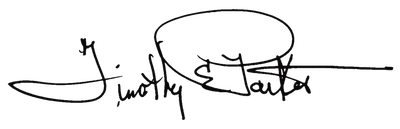
Timothy E. Parker
Guinness World Records Puzzle Master
Founder, Advanced Learning Academy
Verify at: realworldiq.com/verify/RWIQ-PRO-152-DS
DISCLAIMER: This Real World IQ assessment measures cognitive performance through standardized testing methodology. Results represent performance at the time of testing and should not be considered a clinical diagnosis. Career alignments are based on statistical correlations between cognitive profiles and occupational requirements. For clinical cognitive assessment, consult a licensed psychologist.
DATA USAGE: Your assessment data is stored securely and used solely to generate this cognitive report and career recommendations. We do not sell personal data to third parties. For complete privacy policy, visit realworldiq.com/privacy.
SCORE INTERPRETATION: RWIQ scores measure practical cognitive abilities through real-world problem-solving tasks. Scores are not directly comparable to clinical IQ tests, though equivalency estimates are provided for reference.
CAREER RECOMMENDATIONS: Career alignments are generated by matching your cognitive profile strengths against job requirements data from the Bureau of Labor Statistics, O*NET OnLine, and industry associations. These are recommendations, not guarantees of job placement or success.
ASSESSMENT VALIDITY: Questions developed by Timothy Parker, Guinness World Record holder as the world's most syndicated puzzle compiler. This educational assessment uses a documented scoring model. Independent clinical validation and representative norming have not been completed.
© 1996-2026 Advanced Learning Academy. All rights reserved. Real World IQ is a trademark of Advanced Learning Academy.
Get Your Complete Professional Assessment
Unlock your full cognitive profile with the Professional + Career Intelligence assessment. Everything you just saw — the content area analyses, the 18 exploratory career examples with salary data, the job board access, the cognitive training, the Shareable Completion Credential — will be personalized to YOUR unique cognitive abilities.
Lock In $199 -- Start, Pause & Resume AnytimeStart, pause, and resume anytime. 7-day money-back guarantee.
© 1996-2026 Advanced Learning Academy. All rights reserved. Real World IQ is a trademark of Advanced Learning Academy.